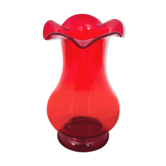
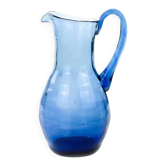
Vase with frill, glass, design by L. Fiedorowicz, Huta Staszic, Poland, 1970s

- Dimensions :
- H29 x W16 x D16
- Color :
- green
- Material :
- glass and crystal
- Style :
- mid-century
Hand-blown vase designed by Ludwik Fiedorowicz and produced at Huta Staszic in Poland in the 1970s, representing the glass craftsmanship of the mature mid-century modern period. The organic, bulbous body gently narrows upwards, spreading into a spectacularly wavy, frilled edge, which is the main decorative element. The vase is made of subtly lime-coloured, semi-transparent glass with a uniform, moderately warm tone. The surface is smooth, shiny, with mirror-like reflections, giving the impression of a wet surface. The base is stable, made from the same glass mass; the form has no grooves, embossing, or surface decorations, allowing the purity of form and colour to stand out. Condition is very good – minimal, natural signs of use are consistent with the age of the item, with no damage, cracks, or chips. The form of this glass sculpture evokes the free spirit of 1970s experimentation, when designers sought new, soft contours and shades inspired by nature. The frilled edge appears as a wave frozen in motion, and the transparency of the glass and subtle lime tone tell the story of a period in Polish design when even utilitarian objects aspired to participate in daily rituals of home aesthetics. Characteristic for Fiedorowicz is the purity of lines and bold use of colour, referring to an era when glass not only decorated but created an autonomous accent of light and form in the interior. The vase from Huta Staszic will look great displayed on a wooden sideboard or shelf with access to daylight, where its shine and colour will be fully expressed. It can be combined with other glass objects from the mid-century modern era or minimalist ceramic bowls and geometric vessels, especially in pleasantly contrasting colours. It will work well in a living room complemented by low, textile sofas or an armchair with a gentle line – in such conditions, it will bring out the lightness and freshness typical of the 1970s, but will also stand out in eclectic collector arrangements, where details from different decades create a unique rhythm of forms and colours.
Vases: other similar vintage pieces
Discover more similar items- -15%
- -20%
- -38%
- -15%
- -15%
- -26%
- -18%
- -15%