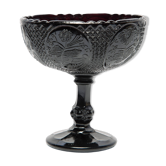
Sugar bowl, New Postmodernism, black hyalite glass, Ząbkowice, Poland, 1970s

- Dimensions :
- H13 x W13 x D13
- Color :
- black
- Material :
- chrome
- Style :
- vintage
The sugar bowl was made in the 1970s by HSG Ząbkowice, one of the most important Polish glassworks, known for its experimental forms and bold finishes during the new postmodernism period. The pressed hyalite glass in deep, opaque black has a high, almost mirror-like gloss, emphasizing its geometric proportions. The vessel's body is decorated with a distinct diamond pattern that breaks the light, creating dynamic reflections and delicate shadows. The wavy, irregular edge contrasts with the precise grid of the pattern, while the smooth, shiny stem and base complete the whole, introducing a subtle dialogue between texture and smoothness. The proportions of the sugar bowl – a wide, flared bowl on a slender stem – highlight its collectible character. The condition is very good, with no visible signs of use or damage. The form of this sugar bowl evokes the spirit of the 1970s – a decade in which Polish glass gained new boldness and decorativeness. The black hyalite, sometimes cool and distinguished, sometimes almost theatrical, reflects light like the surface of a night lake. The diamond relief seems to tell the story of the era's fascination with pattern and chiaroscuro, while the undulating edge suggests movement and freedom, opposing rigid geometry. This is an object that could be the hero of a home ritual, but also a voice of modernist experiments – a vessel that not only stores sugar but also the history of Polish design. In arrangements, this sugar bowl can find its place on a contemporary, minimalist table, where its deep black and sculptural form will create a strong accent. It can be combined with white porcelain or chrome details to emphasize the contrast of eras. It will also work well in eclectic collector's interiors next to glass vases from the same series or geometric trays. It is worth pairing it with textiles of raw texture or a marble countertop – its gloss and pattern will then be clearly exposed, and the whole will gain a refined, postmodern character.
Sweet boxes & sugar bowls: other similar vintage pieces
Discover more similar items- -11%
- -15%
- -63%
- -44%
- -29%
- -11%
- -42%
- -25%
- -67%
- -10%
- -46%