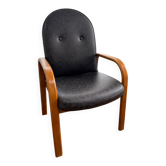
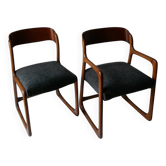
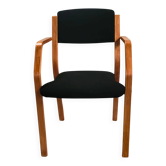
Chair Bow Wood Steiner

- Dimensions :
- H81 x W50 x D40
- Color :
- black
- Material :
- wood
- Style :
- vintage
Certain pieces traverse decades without losing an ounce of modernity. Published by Steiner in the early 1950s, this Bow Wood chair embodies the revival of French furniture after the war. At a time when design broke free from traditional forms, Hugues Steiner developed an innovative collection around steam-bent wood, combining elegance, comfort, and high-quality industrial manufacturing. The design, attributed to designer Wilhelm von Bode, stands out with a remarkably light silhouette: two bent wood uprights seem to envelop the seat while a discreet brass ring connects the backrest to the structure. This technical detail, which has become the signature of the Bow Wood range, allows the backrest to offer a natural flexibility that is particularly pleasant to use. The presented example retains its black upholstery, its solid wood base with a beautiful honey patina, as well as its BOWWOOD metal medallion under the seat, a testament to its original manufacture. A piece with a timeless design, equally elegant around a table as in an office, a bedroom, or a contemporary interior where vintage furniture dialogues with more current lines. Characteristics Dimensions: height: 81 cm depth: 40 cm width: 50 cm Publisher Steiner Model Bow Wood Designer Wilhelm von Bode (attributed) Origin France Period Circa 1950 Materials Steam-bent solid wood Brass connecting ring Black upholstery Suspended structure offering excellent seating comfort Condition Very good condition. The structure is perfectly stable. The wood has a warm patina with a few discreet marks consistent with its age, contributing to the charm of the piece. The upholstery is clean and in generally good condition. The original BONWOOD medallion – Villeneuve-Saint-Georges is still present under the seat, a sought-after element by Steiner furniture enthusiasts. Our view At Atelier 2.9, we select pieces whose design withstands the test of time. This Bow Wood is the perfect illustration: a balance between technical innovation, quality of manufacture, and aesthetic sobriety that explains why, more than seventy years after its creation, it remains a reference in French design.
Lounge & easy chairs: other similar vintage pieces
Discover more similar items- -17%
- -11%
- -20%
- -14%
- -25%
- -10%
- -24%
- -7%