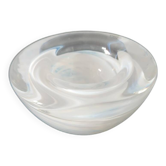
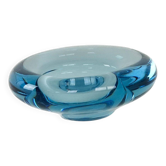
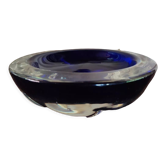
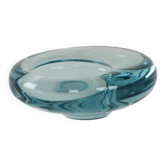
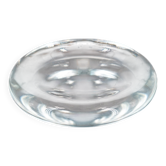
Art Nouveau fruit bowl, glass, Germany, 1970s

- Dimensions :
- H7 x W18 x D18
- Color :
- transparent
- Material :
- glass and crystal
- Style :
- art nouveau
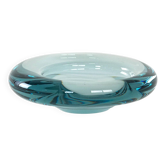
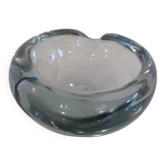
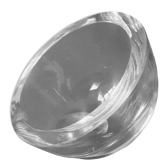
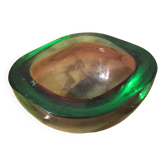
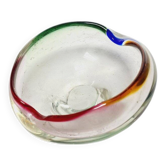
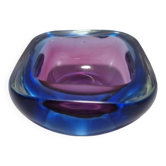
Decorative Joschka fruit bowl from Germany, made in the 1970s, crafted from pressed and hand-finished glass. The bowl features predominantly transparent glass with a massive, wide rim that has a satin-matte, delicately frosted texture, contrasting with the shiny, perfectly clear interior. Inside, there are irregular streaks and organic bands in shades of cool grey and subtle violet, forming a dynamic, studio-like composition characteristic of experimental art glass of the era. The rounded form with a wide, flat depression and a massive, distinctly raised edge refers to Art Nouveau organic motifs, reinterpreted in a modernist spirit. The surface remains smooth, and the colour structures appear unique and unrepeatable. The material is heavy and solid, with a soft, matte texture on the rim and a glossy, light-reflecting interior. The bowl is in very good condition, with no visible damage, chips, or cracks; minor air bubbles typical of handmade glass may be present. This bowl tells a story of dialogue between the late 19th century and the aesthetics of the 1970s – Art Nouveau fascination with nature and fluid lines is transformed here by a modern artist's perspective, where light passes through glass like mist, revealing hidden shades and subtleties. The thick rim seems to protect the delicate centre, as if enclosing a sense of movement inspired by organic marble structures or ink blurs on paper. This object not only reflects light but also seems to tell the story of a time when Art Nouveau motifs returned in contemporary interpretations, carrying both nostalgia and freshness. The bowl can be paired with minimalist, modern tabletops or consoles made of wood and metal, where it serves as a strong decorative accent against neutral materials. Interiors combining vintage elements – especially those with a cool colour palette and simple lines, like mid-century modern – will highlight its colour nuances. It can also be combined with ceramics in neutral tones or placed next to other glass objects for a subtle rhythm of light and colour. In more eclectic arrangements, it will look good against noble fabrics or heavier wooden furniture, where its matte finish will emphasise the organic character of the piece.