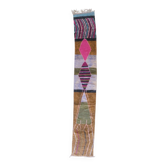
Elephant Mask BAMILEKE (Cameroon).

- Dimensions :
- H135 x W20 x D2
- Color :
- multicolour
- Material :
- canvas
- Style :
- world's craft
Description: No. 1 H: 135 x W: 20 cm. Bamileke elephant masks. Made from a raffia fibre cloth lined on the outside. In a black fabric adorned with coloured glass beads. The anthropomorphic features are edged with indigo felt. The eyes are round and pierced. On each side, large flat, circular ears are sewn, stiffened. By an internal structure. The hood extends at the front and back with a long flap decorated with patterns. Of diamonds and triangles formed by multicoloured beads. In very good condition. History: Elephants are the most imposing land creatures in the world, unmatched in size and power. Thus, elephant masks, although rare in Africa, Are quite appropriate symbols of important leaders or, at least, their respected deputies or messengers. The societies that use these masks actually act as agents of control for the chiefs and as formal royal emissaries. The elephant societies originating from Bamileke and spread elsewhere in the Prairies consist of three graduated ranks achieved through wealth. These elephant masks, signifying royalty and wealth, were worn by powerful members of the Kuosi regulatory society, which included members of royalty, Wealthy titleholders, and high-ranking warriors from the Bandjoun kingdom in western Cameroon. In the past, the payment of a slave or a leopard skin to the chief owner of the society was necessary. To access the highest rank. The glass beads used on earlier masks were trade beads. From the 19th century of Venetian or Czechoslovakian manufacture, also used in exchange for slaves. The elephant mask costumes were thus called "things of silver" because their beads were both objects and. Symbols of wealth. (Brain and Pollock 1971: 100; N.
Curiosity items: other similar vintage pieces
Discover more similar items- -11%
- -41%
- -37%
- -19%
- -17%
- -17%
- -30%
- -45%
- -25%
- -10%