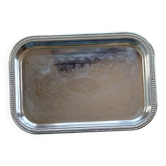
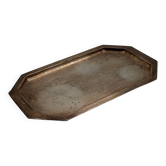
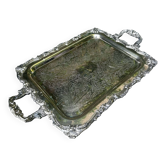
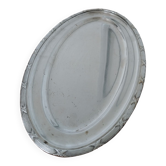
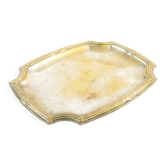
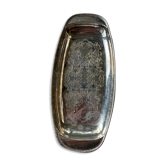
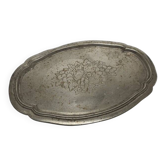
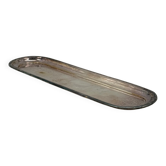
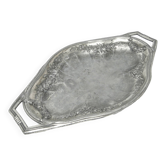
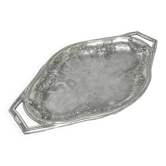
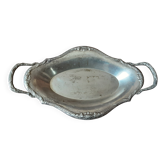
Eclectic tray for glasses, silver-plated brass, WMF, Germany, 19th century

- Dimensions :
- H2 x W11 x D34
- Color :
- silver (Color)
- Material :
- oak
- Style :
- classic
An elongated, oval tray for glasses, made in the 19th century by the WMF manufactory in Germany, crafted from brass coated with a layer of silver. The main tone is a cool, silvery sheen with a noble patina developed over time. The central part of the tray features a dense, rhythmic guilloche pattern, whose fine texture pleasantly refracts light. In the middle, there is an oval cartouche decorated with an ornamental, floral engraving—an arabesque characteristic of the eclectic trends of the second half of the 19th century, where elements of historicism and neo-rococo coexist on one plane. The edges are softly rounded and finished with an impressive triple trim that emphasizes the depth of the form. The surface finish is semi-matte, broken by a shine on the rims, where the silver's luster has been naturally maintained by contact with hands and glass. The tray is in good structural condition—with typical age-related, point discolorations, minor scratches, and local traces of corrosion, which highlight its authentic character without modern interventions. This is an item that recalls the era when goldsmithing met a love for rich ornamentation. The rhythmic, repeating lines of the guilloche lead the eye to the details, evoking the atmosphere of German salons at the end of the 19th century—a place where serving drinks became a small ritual and a gesture of hospitality. The silver shines subtly, telling the story of successive gatherings and meetings in which the tray could have played the role of a discreet companion. Accidental scratches and patina testify that this is an object that was part of everyday life, not just a festive decoration. It can be used during elegant dinners or as a decorative base for glasses, a carafe, or glass vessels—it will work well on a classic oak table or a marble sideboard in the dining room. It will also look interesting when combined with other antiques: crystal goblets or porcelain with neo-rococo motifs. If the interior is kept in the spirit of collector's eclecticism, the tray will introduce a refined, historical counterpoint—though it will also fit into minimalist arrangements, accentuating the dialogue between past and present.
Trays: other similar vintage pieces
Discover more similar items- -24%
- -15%
- Sold out
- -44%
- -68%
- -15%
- -15%
- -15%
- -15%
- -15%
- -35%